

Multihull vs. Monohull: Advantages of Catamarans and Trimarans
We still hear the same questions today that we heard a decade ago: Are catamarans and trimarans really superior to monohulls? In what ways? Does it matter for the way I plan to sail? And what’s the real difference between sailing a catamaran and a trimaran? Here’s an updated look at the fundamentals reflecting major changes in design, technology, and what modern sailors prioritize when seeking a new boat.
Level Sailing & Comfort Underway
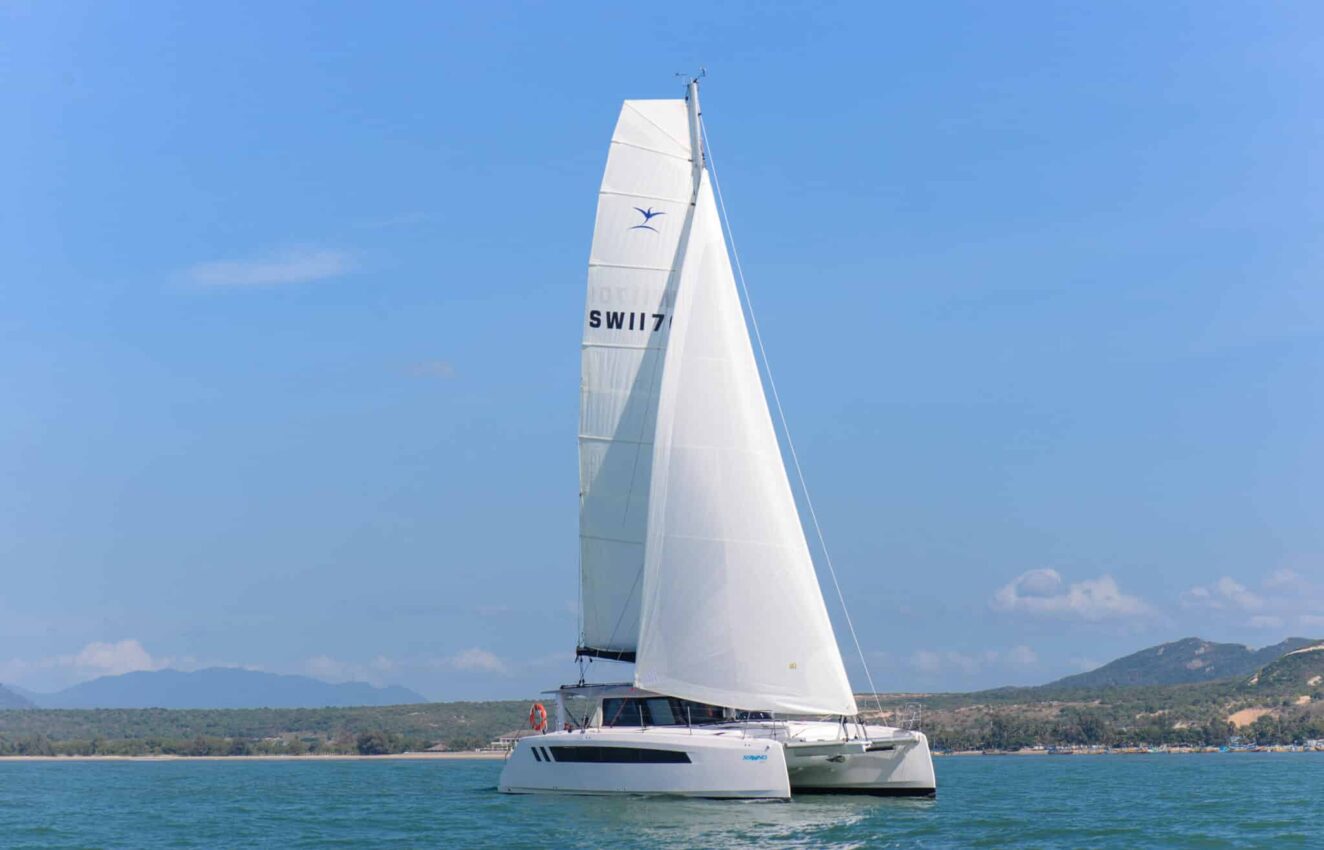
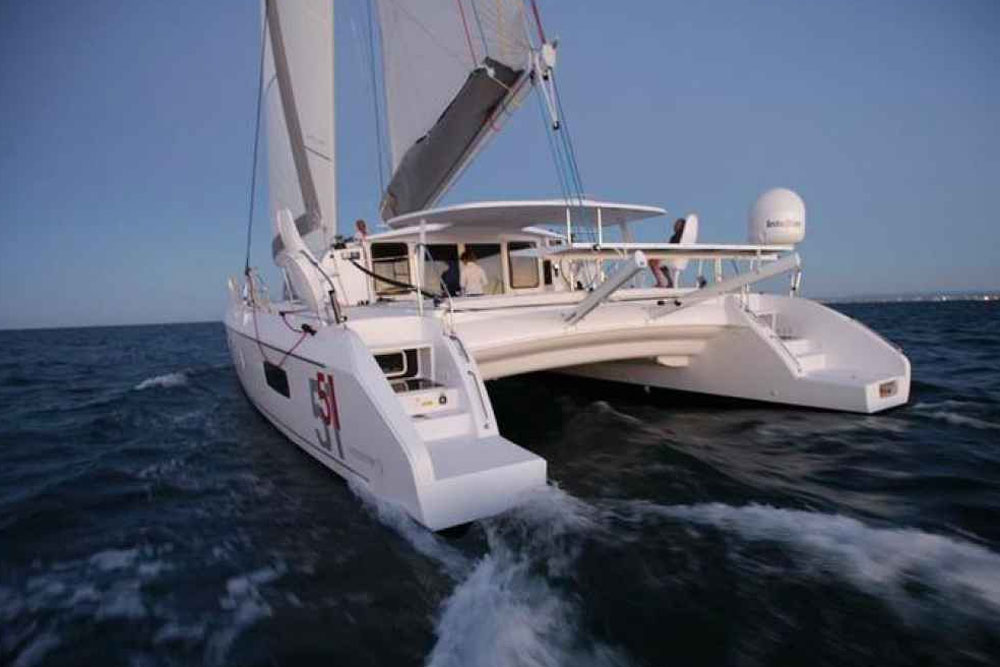
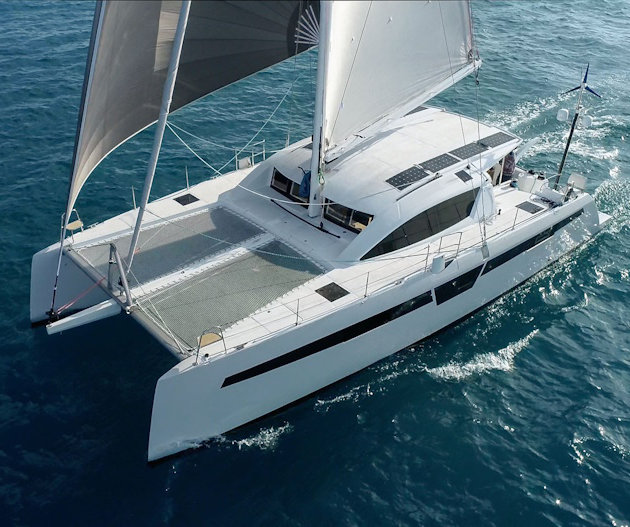
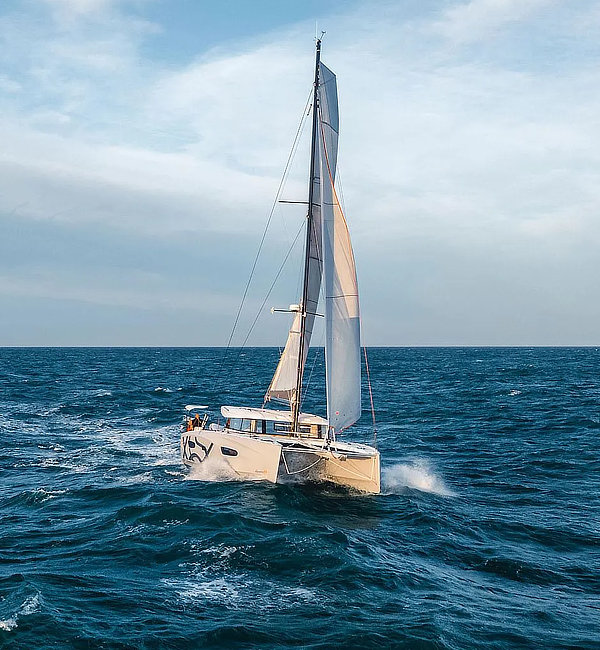
The first thing newcomers notice when they hoist sails and get underway on a modern catamaran is how flat the sailing experience is. Even today’s performance cruising cats rarely heel more than 5–8 degrees before it’s time to reduce sail. On the comfort-oriented cruising models—Lagoon, Fountaine Pajot, Leopard, Bali—heel is often closer to 3–5 degrees.
Compared to living at a 20° angle on many monohulls, life underway on a multihull feels more like being at anchor:
- Meals stay where you set them
- Crew fatigue is dramatically reduced
- Moving around the boat is safer and calmer
- Cockpits and salons remain fully usable while sailing
A decade ago, performance cats heeled a bit more. Today, with improved hull shapes, lighter structures, and automated sail handling, even fast cruising cats stay surprisingly flat.
Speed & Sailing Performance
Cruising Catamarans
Advances in hull shaping, weight reduction, carbon reinforcement, square-top mains, and larger modern sail plans have made today’s cruising cats significantly faster than their 2010s counterparts. A typical 40–50 ft cruising cat now sails:
- 20–30% faster than an average same-length cruising monohull
- Easily making 7–10 knots on passage with less effort
- Regularly ticking off 200 nm days on properly handled boats
Where monohulls often rely on long waterlines and ballast, modern cats rely on efficient hulls and powerful rigs—making “fast and comfortable” a realistic combination, not a compromise.
Trimarans
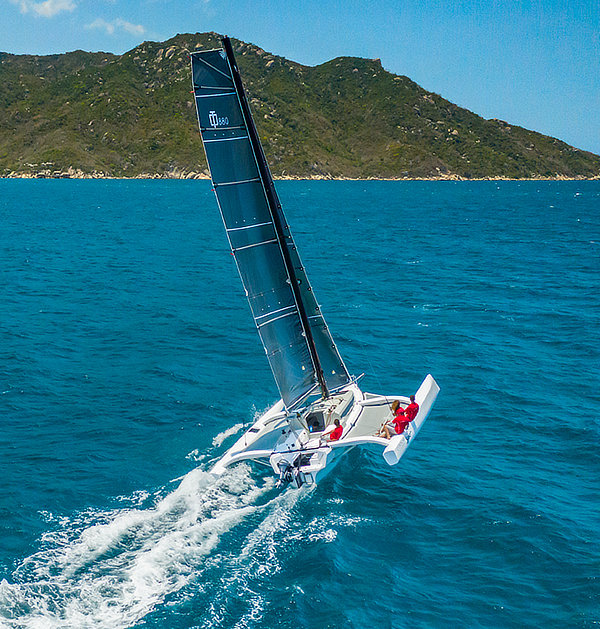
Trimarans (Corsair, Dragonfly, Rapido, etc.) remain in a class of their own. With ultra-light displacement and massive righting moments, they routinely achieve:
- Double the speed of similar length monohulls
- True wind angles that would surprise most keelboat sailors
- Downwind surfing speeds in the high teens or beyond (on larger boats)
New materials and folding amas have also made modern cruising trimarans more user-friendly (they can easily fit in a regular single slip), possibly trailerable, and safer.
Loading Sensitivity
One thing hasn’t changed: multihulls still hate weight. However, the last decade has seen designers shift buoyancy, widen transoms or make use of aggressive chines, and move weight centrally—so many cruising cats now tolerate loading better. Still, overloading a cat or tri will hurt performance more than overloading a monohull.
Reefing Requirements
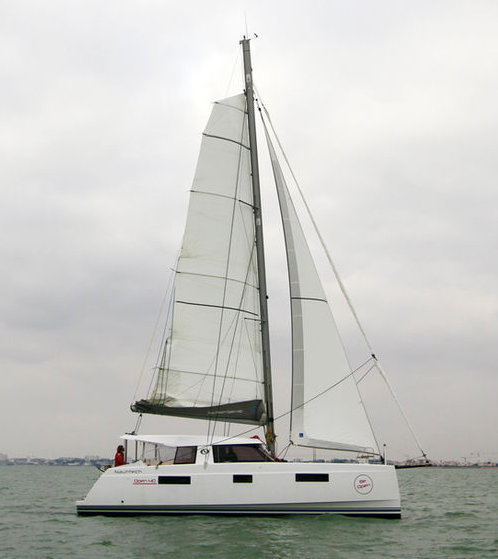
Reefing discipline remains essential. Because multihulls don’t heel much, extra wind loads go straight into the rig instead of being “spilled” by heeling.
Modern improvements include:
- Load sensors and digital rig monitoring on top-end multis
- Self-tacking jibs and simplified reefing systems
- Boom furling and electric winches that make reefing faster
- Clear manufacturer reefing charts based on apparent wind
Today’s multihulls are far safer and can be easier to reef than older designs, but beware the added friction of single-line reefing systems with all lines led around multiple blocks to the cockpit. The principle remains: reef early and reef often. A properly reefed cat or tri is almost always faster and unquestionably safer.
Safety & Unsinkability
Multihulls continue to shine in several key safety areas:
1. Stability & Crew Safety
Level sailing makes it easier to keep crew onboard, prevent fatigue, and avoid accidental slips. The wide beam and open cockpits common on today’s designs put crew far from the lifelines—a major safety plus.
2. Avoiding Bad Weather
Modern multihulls are often fast enough to outrun or route around weather systems, especially when paired with contemporary satellite forecasting tools.
3. Unsinkability
Almost every production catamaran and trimaran built since 2000 incorporates positive flotation, foam compartments, watertight bulkheads, or crash boxes. Many could indeed be cut into pieces and each piece would still float. This also makes fire the primary hazard aboard a modern cat—particularly as more boats adopt lithium systems.
Can My Catamaran or Trimaran Flip?
It remains theoretically possible, but extremely rare. Modern multihulls have:
- Better, lower, more central weight distribution
- More easily managed sail plans and hardware
- Improved stability calculations
- Clear manufacturer reefing guidelines
Capsize events still require a perfect storm of severe weather, breaking seas, and excessive sail area—conditions in which every vessel is in trouble.
Importantly, if the worst does come to pass, a multihull tends to remain floating—upright or inverted—providing a large platform for visibility and rescue, and access to gear. This is often safer than relying on a deployed liferaft while your monohull, weighed down by a heavy keel, is resting on the bottom.
Motoring Performance & Maneuverability
Multihulls continue to excel under power:
Catamarans
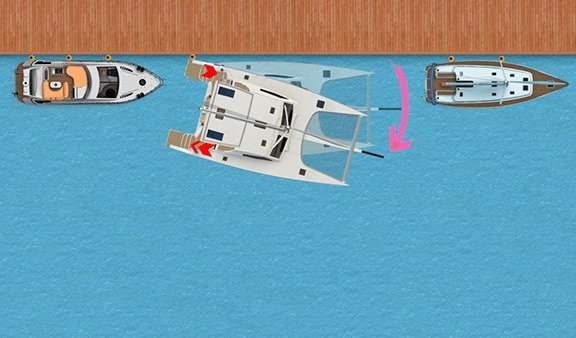
- Twin engines placed far apart allow extraordinary maneuverability (this is something that surprises many newbies as they work the helm of their first large cat)
- They can spin in place, sometimes move sideways, and dock in tight spaces
- Fuel efficiency is excellent due to light, narrow hulls (cruisers often motor using just one engine, dramatically reducing fuel consumption with little effect on speed)
- Hybrid or electric options now exist from multiple builders
Trimarans
- Still usually equipped with a single engine, so lacking the maneuvering benefits of a catamaran
- Narrow center hull tracks beautifully
- Very efficient at moderate speeds
Crew Space, Living Comfort & Lifestyle Appeal
This is where the biggest shift in the market has happened.
Catamarans
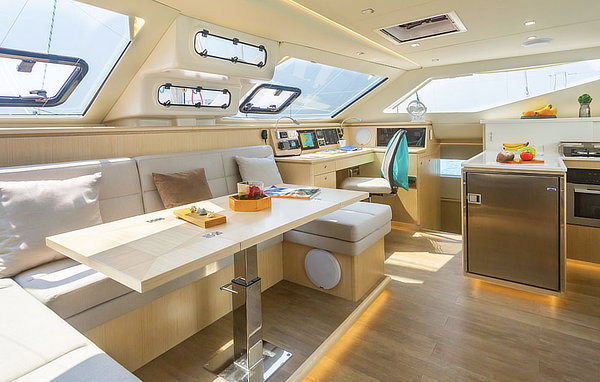
A modern 45–50 ft catamaran now offers living space comparable to a 60–70 ft monohull from a decade ago. The combination of:
- Huge cockpit lounges
- Flybridges or raised helm stations on some models
- Massive galley-up salons, or truly decadent galleys below
- Walk-around beds
- Expansive windows and natural light
…has made catamarans the default choice for liveaboards, cruisers, and the charter market.
The modern buyer often prioritizes:
- Home-like comfort
- Social spaces
- Panoramic visibility
- Energy independence (solar, lithium, electric cooking)
And new designs cater directly to those desires. You can live aboard full time and cruise while giving up VERY LITTLE of your home-style comforts.
Trimarans
Trimarans still prioritize performance over interior volume. Interiors are smaller than comparable monohulls or cats, though improvements in modular furniture, galley layouts, and lightweight materials have helped. The tradeoff remains clear:
- If you want speed and sailing purity, choose a trimaran or performance-oriented cat.
- If you want living space and comfort, choose a cruising catamaran.
Shallow Draft
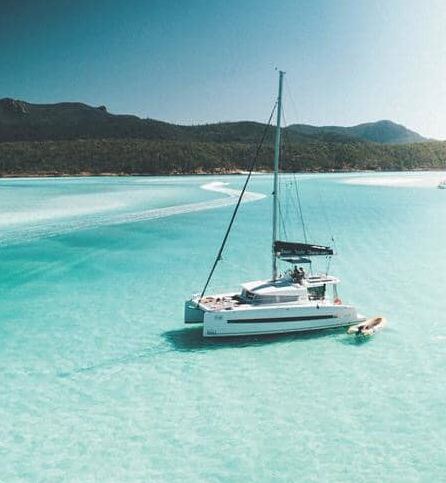
Nothing has changed here except that new multihull designs make shallow-water sailing even easier.
Catamarans:
- Typically draw 3–4 ft in the 40–50 ft range
- Can access areas monohulls often avoid: Bahamas, Belize, South Pacific reefs
- Can often be dried out on tidal flats for maintenance (touch up on bottom paint, repair props, change saildrive seals, etc.)
Trimarans:
- Often draw under 2 ft with boards up
- Ideal for beaching, camping, and exploring remote shallows
The freedom to anchor almost anywhere is a major reason many buyers choose multihulls.
Conclusion
The last decade has seen huge advances in materials, hull design, more robust and larger rigs and sail plans, hybrid propulsion, and the refinement of living spaces. Combined with a cultural shift toward comfort, safety, and ease of handling, multihulls have become the go-to choice for families, liveaboards, and world cruisers.
Whether a multihull is “better” than a monohull depends on what you value most—but in many categories that matter to today’s sailors, catamarans hold a decisive edge.