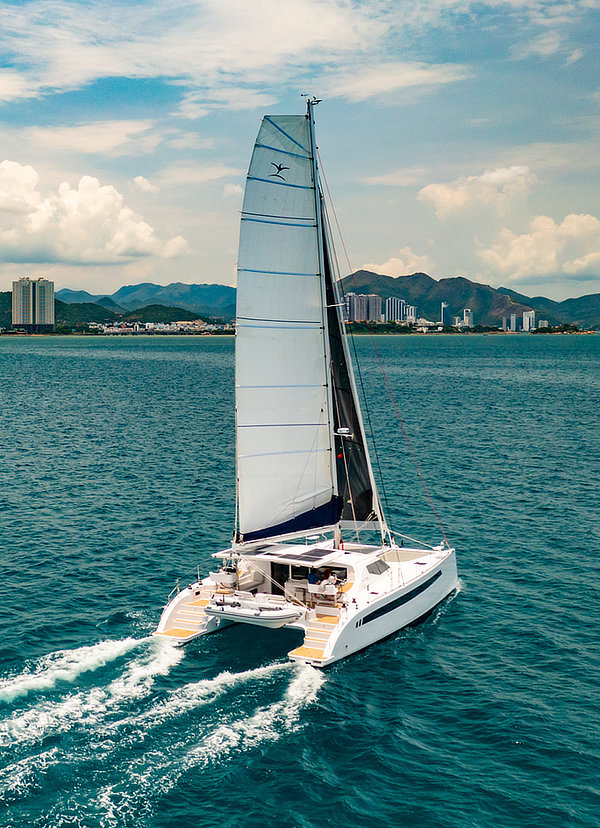
The Modern Cruising Catamaran Spectrum: Comfort vs. Performance
Today’s cruising catamarans fall along a clear spectrum. On one end are the spacious, comfort-oriented designs popular in charter fleets and among liveaboards. On the other are lightweight, performance-driven cats built for sailors who want faster passages and precise handling. Most models find a middle ground, but understanding the design elements that push a boat toward one end of the spectrum or the other helps buyers choose the right cat for their sailing style.
Below are the key factors that define where a modern catamaran sits on that spectrum—and the tradeoffs involved.
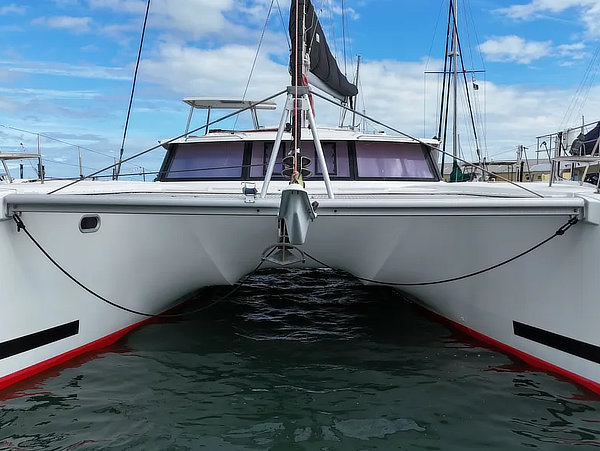
Hull Width
Comfort-Oriented:
Wider hulls = more interior volume, bigger berths, roomier heads.
- Pros: Exceptional living comfort, storage, and privacy.
- Cons: More drag, slower acceleration, reduced pointing ability.
Performance-Oriented:
Narrower hulls reduce wetted surface and increase efficiency.
- Pros: Higher speeds, better light-air performance.
- Cons: Tighter cabins, less storage, smaller payload tolerance.
Freeboard Height
Comfort Cats:
Higher freeboard creates huge interior volume and dry decks.
- Pros: Massive salons with standing headroom plus, decent bridgedeck clearance.
- Cons: More windage, higher center of gravity, pounding in chop if there is a corresponding loss of bridgedeck clearance.
Performance Cats:
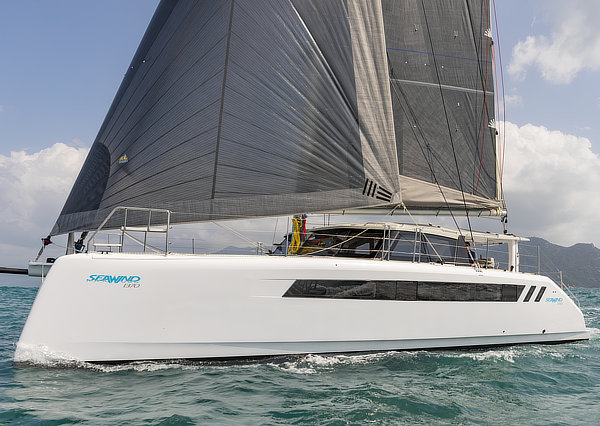
Lower freeboard minimizes weight and windage.
- Pros: Better upwind ability and reduced drag.
- Cons: Smaller interior spaces; a bit more spray.
Flybridge Helms
Comfort Cats:
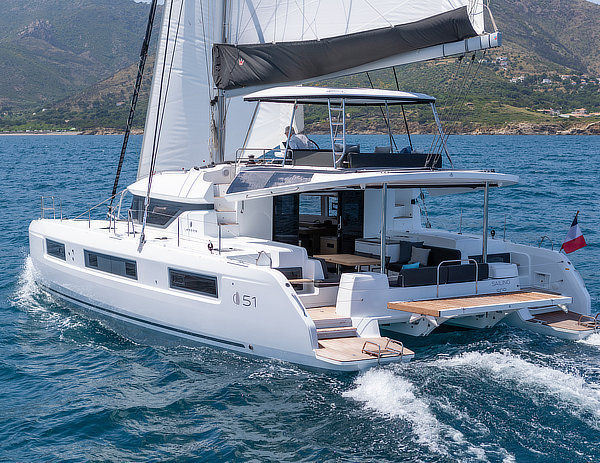
Flybridges add lounge space, visibility, and unique social areas.
- Pros: Great for charter, family cruising, and entertaining.
- Cons: Adds windage, raises weight aloft, increases pitching, slightly reduces performance.
Performance Cats:
Typically avoid flybridges or use lower-profile raised helm designs.
- Pros: Lower center of gravity, reduced windage, better sail handling ergonomics.
- Cons: Less outdoor lounging space.

Daggerboards vs. Fixed Keels
Comfort Cats (Fixed Mini-Keels):
- Pros: Simple, robust, low maintenance; good tracking under power.
- Cons: Lower pointing ability, reduced upwind performance, slower VMG.
Performance Cats (Daggerboards):
- Pros: High lift → excellent pointing angles and speed; retractable for shoal draft.
- Cons: More complexity; potential for impact damage; reduced interior space.
Bridgedeck Clearance
Comfort Cats:
Varies widely. Often lower than most designers would choose.
- Pros: Lower bridgedeck reduces overall freeboard and windage; hull shapes are generally quieter than older-generation cats.
- Cons: Low-clearance comfort cats can “pound” in chop, reducing comfort underway.
Performance Cats:
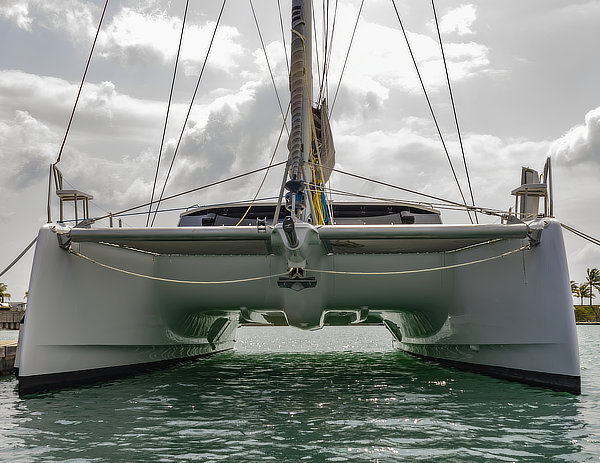
High bridgedeck clearance is a priority.
- Pros: Reduced pounding, better speed, smoother motion.
- Cons: Can raise overall profile of the boat (though less than a typical comfort cat high freeboard design).
Overall Weight
Comfort Cats:
Heavier due to amenities: generators, large tanks, air conditioning, bigger galleys, more storage that you WILL fill up.
- Pros: Stability at anchor, luxury afloat, charter-friendly.
- Cons: Slower sailing, especially in light air.
Performance Cats:
Built with carbon, foam cores, and other weight-saving design elements. minimized storage.
- Pros: Fast, responsive, capable of long daily runs.
- Cons: Payload-sensitive; require close attention to avoid overloading.
Weight Placement
Comfort Cats:
Weight often spread through hulls and bridgedeck due to interior layouts and systems.
- Cons: Central weight too high or aft can increase pitching and reduce speed.
Performance Cats:
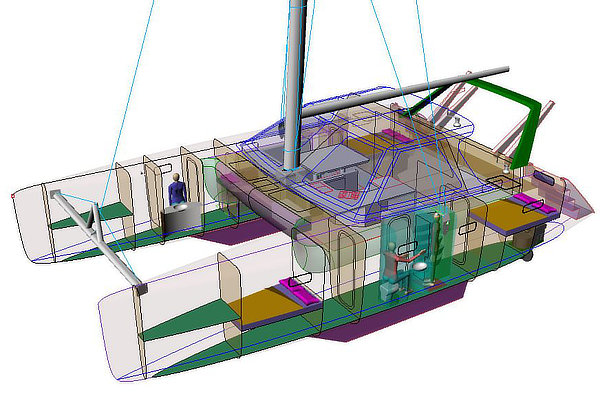
Weight centered low and near the mast for minimal pitching.
- Pros: Smoother motion, better balance, improved acceleration.
- Cons: Tighter design constraints; limits on interior layout flexibility.
Conclusion
The choice between comfort and performance isn’t about right or wrong—it’s about priorities.
- If you value space, stability at anchor, and home-like comfort, a wider, higher-freeboard, fixed-keel cat may be ideal.
- If you prize speed, handling, and efficient passagemaking, look for narrow hulls, daggerboards, high bridgedeck clearance, and tightly managed weight.
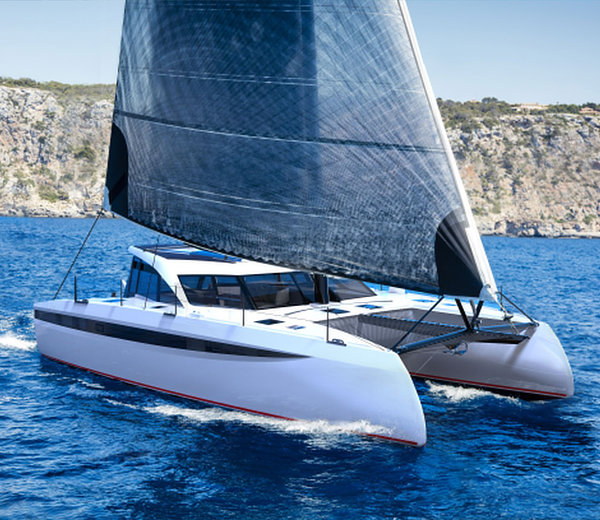
Both platforms illustrated here excel at what they’re designed to do, and each designer/manufacturer works hard to find the best series of design and build compromises to create a cat that makes the most of her best features, and reduces the less attractive bits. The key is choosing the part of the catamaran spectrum that best matches how you actually plan to sail. Our team can help you with the decision, and identifying the makes/models that are best suited to your spot on the catamaran spectrum.
Positioning Some Catamaran Builders on The Spectrum
Even within a brand, different models vary significantly — e.g., a “small” model might lean performance, a “large” model toward comfort. Always check the specifications (beam, displacement, sail plan, hull shape, keel/daggerboard setup, bridgedeck clearance).
Load matters. Performance-oriented cats (narrow hulls, daggerboards) are often very sensitive to weight — overloading them with fuel, water, gear, provisions can ruin performance.
Purpose defines the right boat. Are you planning long-distance cruising, coastal hopping, family vacations, liveaboard, chartering, or mixed-use? Your mission should guide the tradeoffs you make.
If you prioritize comfort, living space, socializing and charter-style amenities → Look at the main charter brands (Lagoon, Bali, Leopard, Fountaine Pajot). They offer wide, stable platforms, generous interiors, easy handling, and forgiving behavior under sail or power. Great for families, liveaboards, or vacation style sailing.
If you care about sailing performance, upwind ability, and efficient passagemaking → Consider some more performance-oriented brands (Outremer, HH, Catana, Balance, Seawind). These tend to have narrower hulls, daggerboards or performance keels, lighter displacement, and refined hull/deckhouse profiles, trading some comfort and volume for speed and efficiency.
If you want a balance between the two extremes → Brands like Seawind often hit a sweet spot: very comfortable, well-designed but not huge living spaces, and reasonably good sailing performance.